

WASHINGTON, DC — Toyota is recalling 314,029 Toyota and Lexus vehicles in the United States over Takata front passenger air bag inflators, even though the company says its own testing has not found measurable propellant degradation and no one has reported a rupture tied to the issue. The recall was filed with the National Highway Traffic Safety Administration on Nov. 12 and is being treated as a precaution based on inflator age, not on a documented failure in the field.
In the filing, Toyota says it has seen no U.S. warranty claims or field technical reports connected to the condition and knows of no ruptures reported under NHTSA’s standing general order on the matter. Still, Toyota concluded that the inflators are nearing the end of their estimated service life and should be replaced before age becomes a safety problem.
Corollas make up most of the recall population
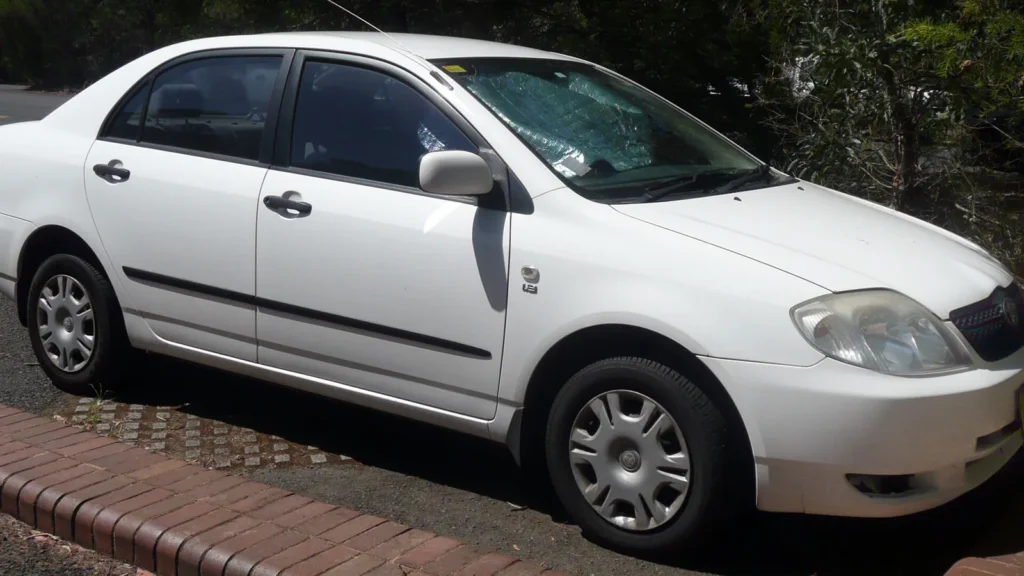
The largest share of the recall involves Toyota Corolla models, with 232,174 vehicles from the 2003 through 2008 model years. Toyota’s filing says those cars account for about 74% of the total population, making the Corolla the clear center of the campaign.
The rest of the recall includes 35,949 Toyota 4Runners from 2016 and 2017, 25,174 Toyota Tundras from 2005 and 2006, 10,736 Toyota Sequoias from 2005 through 2007, 8,931 Lexus GX 460s from 2017, 1,064 Lexus SC 430s from 2002 through 2010, and one Lexus IS 250 from 2011. NHTSA campaign 26V748 covers all seven nameplates.
Only certain inflator installations are included
Toyota says the recall is not based simply on model year. Instead, it applies to vehicles whose front passenger inflators were installed during a specific window, either as original equipment or as replacements during an earlier recall. That detail matters because it means two otherwise similar vehicles may not both be affected.
The filing also shows how narrowly the population was defined. Toyota says one vehicle appears on the list because the affected inflator was installed under the right conditions, underscoring that the recall is tied to the inflator itself rather than to the entire model line. Owners cannot assume coverage from a model year alone.
Toyota points to service-life modeling, not observed failures
Toyota says it has been analyzing this propellant type since 2016 and has not found measurable degradation in the inflators it has tested. The filing also says the company decided on Nov. 6 to move ahead with a voluntary recall as a precaution.
The reason is modeling. Toyota cites service-life studies by TK Global and the Independent Testing Coalition, saying both estimated how long these Takata inflators can remain safe in service. Toyota describes TK Global’s work as the more conservative of the two and says the inflators in this campaign are approaching the end of that estimated life.
After that point, Toyota says degradation could increase the risk of rupture if the air bag deploys. NHTSA’s long-standing explanation for Takata inflators is that heat and humidity can break down the propellant, causing it to burn too quickly and build excess pressure inside the inflator housing.
The filing says the defect rate is unknown, not 1%
One field in Toyota’s submission has already led to confusion. The filing lists an “estimated percentage with defect” of 1%, but Toyota’s own explanation says it cannot estimate how many of the affected vehicles actually contain the defect. The number is used only because NHTSA’s system requires a whole-number entry.
That means the form should not be read as a true 1% defect rate. Toyota’s filing says the actual rate is unknown, and anyone using the number as a measured estimate would be misreading the recall paperwork.
Replacement inflators and older Takata repairs are part of the picture
The affected population includes some inflators that were installed as replacements during earlier recalls, not just original factory parts. Toyota does not say in the filing which earlier recall those replacements came from or how many of the 314,029 vehicles have already received a Takata repair.
That history matters because Takata campaigns have often evolved over time. NHTSA records show earlier recalls involving Toyota and Lexus vehicles whose inflators had been replaced with the same design, and later schedules pulled some of those replacement parts into new actions. Toyota’s latest filing does not say whether the replacement inflators in this campaign are part of that same pattern, but it confirms that some repaired vehicles are still included.
The filing also says inflators of the same design installed later may have more service life remaining, and Toyota says it is continuing to monitor them. It does not say whether more recalls will follow.
Owners will get free repairs and notices beginning in late December 2026
Toyota says dealers will replace either the front passenger inflator or the entire air bag assembly, depending on the vehicle, at no cost to owners. The company lists its recall numbers as 26TB25, 26TA25, 26LB11 and 26LA11.
Owner notifications are scheduled to go out by Jan. 11, 2027, with the remedy notice window planned for Dec. 28, 2026, through Jan. 11, 2027. Toyota says owners can check their 17-digit VIN at NHTSA’s recall site or Toyota’s recall page, and NHTSA warns that newly announced recalls may not show up immediately in its lookup tool.
Toyota’s customer service line is 1-800-331-4331. Because many affected vehicles are older, NHTSA also advises owners to keep registration addresses current so recall letters reach the right home.

Leave a Reply