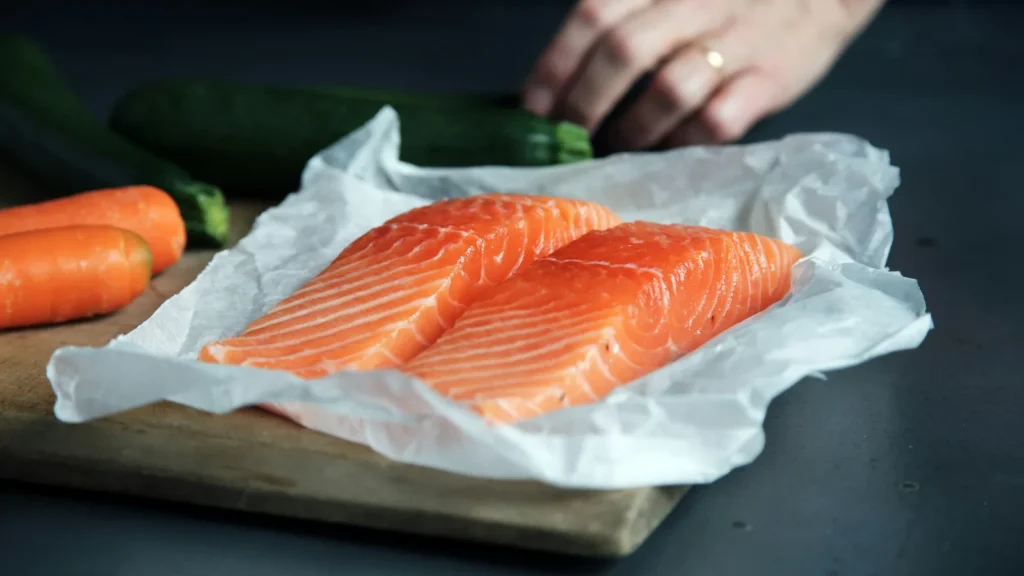

WASHINGTON, DC — The Food and Drug Administration has placed two Starfish Seafood smoked fish recalls in its highest risk category after concerns that the products may be contaminated with Listeria monocytogenes. The recalled items are Cold Smoked Norwegian Salmon and Cold Smoked Trio Salmon Halibut Trout.
Both recalls were first announced in October and were voluntarily initiated by Krasnyi Oktyabr Inc., a wholesale seafood distributor based in Brooklyn, New York. The FDA said this week that both actions are now classified as Class I, which is the agency’s most serious recall designation.
The classification does not mean every package is confirmed to contain the bacterium. It does mean the FDA considers exposure to the products potentially dangerous enough to warrant the strongest warning level.
What consumers need to know about the smoked salmon recall
The more specific of the two recalls involves Starfish Seafood Cold Smoked Norwegian Salmon. According to the FDA, the salmon was sold frozen and can be identified by UPC number 4751048940099.
Consumers should also look for lot number D080-148 and a best-before date of November 27, 2027. The agency is telling shoppers to compare those details with the information printed on packaging before deciding whether a package is affected.
The second product, Starfish Seafood Cold Smoked Trio Salmon Halibut Trout, was also pulled into the Class I action. In that case, the FDA identified the product by name but did not include package codes, lot numbers, or expiration details in the available recall information.
Products were shipped across nine states, not just New York
The recalled seafood was distributed in New York, Florida, Georgia, Massachusetts, South Carolina, North Carolina, New Jersey, Ohio, and Nevada. Because the products moved across state lines, the warning applies far beyond the distributor’s home state.
That distribution pattern means shoppers who bought specialty smoked fish should check freezers and refrigerators even if they live outside the Northeast. The FDA cautioned that people should not assume the recall is limited to customers in Brooklyn or the New York area.
Anyone who finds one of the recalled products should follow the recall instructions rather than serving or using it in a meal. The agency said consumers can also check its website for additional recall information or contact the distributor if they are unsure whether a package they bought is included.
Why the FDA considers Listeria a serious food safety threat
The FDA’s concern centers on possible contamination with Listeria monocytogenes, a bacterium that can cause listeriosis, a serious infection. Some people may have only mild illness, but the infection can be far more dangerous for certain groups.
Pregnant women, newborn babies, older adults, and people with weakened immune systems face the greatest risk of severe complications. For pregnant women, infection can also create serious health concerns for the unborn baby.
Symptoms can include fever, muscle aches, tiredness, headache, and digestive issues such as diarrhea. More severe cases can affect the nervous system and may cause confusion, loss of balance, or seizures. Symptoms may not appear right away, which makes it important for anyone who may have eaten the recalled fish to watch for health changes.
FDA says do not eat the fish even if it looks normal
The agency has stressed that consumers should not eat either recalled seafood product, even if the fish appears and smells fine. Food contaminated with Listeria may not show obvious signs of spoilage.
Shoppers who have an affected package should return it to the place of purchase for a full refund, according to the recall instructions. The products should not be served to other people or used in recipes.
The FDA’s enforcement reports continue to list both recalls as ongoing. That means the warning remains active while the agency and the distributor keep the recall process in place.
How the Class I designation changes the risk conversation
A Class I designation is reserved for recalls involving products that could cause serious adverse health consequences or death. In this case, it signals the FDA’s highest level of concern, even though the agency has not said that every package is contaminated.
For consumers, the practical takeaway is simple: check the packaging carefully, set aside any affected product, and follow the return instructions. The FDA’s warning is aimed at stopping people from eating seafood that could carry a dangerous pathogen.
Because the products were distributed in multiple states and the recall remains active, the agency is urging shoppers to take the notice seriously. The combination of frozen storage, specialty packaging, and incomplete product details on one of the items makes it especially important to compare labels carefully.

Leave a Reply