HOUSTON, TX — Food safety checks are supposed to catch problems before contaminated products reach American tables, but federal oversight is far short of the mark for foreign plants. A Government Accountability Office review says the Food and Drug Administration is supposed to inspect about 19,200 foreign food facilities each year under a 2011 law, yet it is doing only about 900, or roughly 5% of that target.
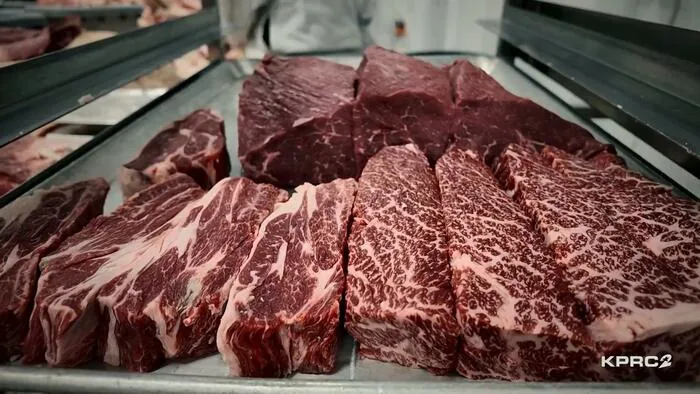
The shortfall comes as Texas consumers have already seen a wave of recalls tied to imported beef, lettuce, eggs and peppers. In August, federal officials announced a recall of nearly 30,000 pounds of beef imported from Argentina, adding to a summer that also included a multistate lettuce outbreak, an egg recall involving Texas farms and recalls of fresh jalapeños and other meat and poultry products.
Summer recalls in Texas show how contamination can spread through the food chain
Texas food safety officials and private operators say the recent recall pattern shows how many hands can touch a product before it is sold. Anthony Thomas, who owns Thomas Cattle and Catering in Texas Hill County, said his operation focuses on raising cattle and processing beef in a smaller, more transparent system.
Thomas said his beef is custom harvested, dry aged and custom butchered directly from pasture to plate. He argued that larger supply chains create more chances for pathogens, contaminants and diseases to enter food. His view is that consumers often do not know where food comes from, and that ignorance can make the system more vulnerable.
The recalls highlighted in the story included iceberg lettuce linked by the CDC to cyclospora illnesses in 21 states, including 24 cases in Texas, and more than 19 million eggs produced in Texas that were recalled over salmonella concerns. Federal officials also have issued 17 meat and poultry recalls since June, including seven tied to imports.
The FDA says it lacks the staff to meet Congress's inspection target
Congress wrote the foreign-inspection requirement into the Food Safety Modernization Act, a law signed in 2011 that was designed to move federal food safety efforts toward prevention instead of reaction. But the GAO says the FDA has never met its inspection goals, and in January it again flagged the agency’s oversight as a problem.
Steve Morris, who leads food and agriculture work for the GAO, said the agency has been carrying out 5% or less of the foreign inspections the law contemplates. He said federal officials should be candid with lawmakers when they do not have the resources to do the job as written. The GAO has treated food safety oversight as a high-risk area since 2007.
The FDA responded in writing that it has already said it is not adequately resourced to meet the target. The agency said the 19,200-inspection number applies to every registered foreign facility, regardless of risk level, and that it is now studying how many inspections are actually needed to match oversight of domestic plants.
Federal agencies split food oversight and count recalls in different ways
One reason the scale of the problem is hard to gauge is that food oversight is divided between agencies. The USDA handles meat, poultry and egg products, while the FDA oversees nearly everything else. Because the agencies track recalls differently, comparing year-to-year trends is not simple.
According to raw data posted online by both agencies, FDA food recalls were flat to slightly higher depending on the method used to count them. Measured by federal budget year, they were up 18% from 2024 to 2026. USDA recalls for meat and poultry rose from 34 in 2024 to 42 in 2025, based on the agency’s annual summaries.
By weight, the amount of recalled meat more than tripled to more than 71 million pounds, driven largely by foreign-object recalls involving materials such as plastic or metal. Texas rapid-response official Davonna Koebrick said the number of recalls is actually lower than it was last year, even though illness events have still been significant.
Recalls are reactive, and they do not show the full illness burden
Food recalls can remove a product from circulation, but they do not prevent an outbreak once contamination has already occurred. Morris said recalls are a tool used after a problem has been identified, not a preventive system in themselves.
He also said recalls are mostly voluntary, with manufacturers or producers generally issuing them when a safety issue is found. The FDA can order a mandatory recall, but Morris said the agency has not done so since 2011. Even then, a recall does not reveal how many people got sick or how serious those illnesses were.
Foodborne illness is also hard to count nationally. The CDC does not publish one single annual count of all foodborne illnesses, and its core surveillance system now tracks only salmonella and a dangerous strain of E. coli known as STEC. The CDC estimates salmonella from food sickens about 1.3 million Americans each year.
Texas investigators trace outbreaks backward from the sick to the supplier
When an outbreak is detected, Koebrick’s team works with the FDA on traceback investigations that follow food from the patient back to the source. She described the process as a daily collaboration between state and federal officials and compared it to a crime investigation.
The first step is identifying the likely food, such as lettuce or another ingredient tied to illnesses. Investigators then gather purchase records from restaurants or stores, trace the seller to its supplier and keep moving through the supply chain until a common source appears. The route can cross state lines or national borders.
That global chain is part of the challenge. Morris said a large share of the country’s food comes from elsewhere, which means an outbreak can depend on records and inspection systems spread across multiple jurisdictions. The complexity also explains why officials say recalls and traceback work are only pieces of a much larger safety picture.
Smaller ranches argue for local beef, but experts say imports still need strong oversight
Thomas believes a locally controlled operation reduces risk, and he says his ranch is transparent about how its cattle are handled. At the processing plant, he described a USDA-regulated facility where an inspector is present, checks the kill floor and stamps meat as safe for consumption after review.
He also said American ranchers cannot supply all the beef sold in grocery stores, which makes import oversight important. Morris said once foreign meat is approved, USDA treats it as equivalent to domestic meat, and the key issue is whether imports could introduce dangerous diseases into the U.S. food supply.
That tension between trust, price and scale runs through the larger debate. Thomas said companies often buy in large volume to get the cheapest price and maximize profit. Morris said the long-term answer should be a national strategy with clear goals, leaders and resources. Thomas, for his part, said he would try to source 100% American beef for Americans.

Leave a Reply