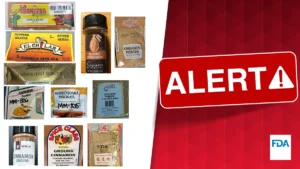


WASHINGTON, DC — The Food and Drug Administration has expanded a recall tied to a multistate E. coli O145:H28 outbreak linked to organic frozen blueberries and mixed berry products imported from Chile. The agency says consumers should not eat, sell or serve the affected Great Value and Trader Joe’s items, even though the outbreak has been declared over.
FDA says the latest recall expansion, announced Oct. 2 by Frutas y Hortalizas del Sur S.A., adds more lots of Great Value frozen organic triple berry blend and Great Value frozen organic blueberries, along with one lot of Trader Joe’s Organic Mixed Berry Blend. The products have “Best By” dates in 2028, so they may still be in home freezers.
The outbreak investigation identified 17 illnesses in two states, with six hospitalizations and no deaths. FDA is telling consumers to check their homes carefully and to discard any recalled product or return it to the place of purchase for a refund.
How the outbreak spread across two states and led to hospitalizations
CDC and Florida Department of Health partners tracked the outbreak to people infected with the same strain of E. coli. Illnesses began between May 11 and Aug. 2, 2026, and officials said 11 of 13 interviewed patients reported eating frozen blueberries.
By the time the outbreak was declared over on Sept. 21, health officials had identified cases in Florida and Georgia. The FDA’s update says the last illness onset was Aug. 6, 2026, and that no deaths were reported.
The agency said the epidemiology pointed strongly toward frozen blueberries as the likely vehicle. That information, along with later inspection findings, led regulators to keep broadening the recall even after the outbreak itself ended.
Products now included in the Oct. 2 recall expansion
The expanded recall includes Great Value Organic Triple Berry Blend 10-oz packages with lot codes 6 031 01 and 6 041 01, plus best-if-used-by dates of Jan. 31, 2028, and Feb. 10, 2028. FDA also listed Great Value Organic Blueberries 10-oz with lot codes 6 019 01, 6 040 01 and 6 163 01, carrying best-if-used-by dates of Jan. 19, 2028, Feb. 9, 2028 and June 12, 2028.
Also covered is Trader Joe’s Organic Mixed Berry Blend 12-oz with lot code 6 051 01 and a best-before date of Feb. 20, 2028. FDA said the recalled products should no longer be available for sale, but the long shelf life means consumers may still have them on hand.
Earlier recall actions also involved Publix GreenWise frozen blueberries and mixed berries after testing by a customer of the Chilean supplier found a sample with the same outbreak strain. FDA says those items should not be eaten and should be removed from homes immediately.
What FDA says happened during the investigation in Chile
FDA said the expanded recall followed new information collected during an on-site foreign inspection of Frutas y Hortalizas del Sur S.A. in San Carlos, Chile. The agency also said the firm did not provide all of the records FDA had asked it to voluntarily supply earlier in the investigation.
Based on its findings, FDA added products from the company to Import Alert 99-35. That means frozen blueberries from the firm offered for entry into the United States may be detained without physical examination.
The agency says the investigation found enough concern to justify keeping the company under tighter scrutiny. FDA has also said products from the firm that have not yet entered the U.S. market may still be subject to action if they are offered for import.
Where recalled berries were sold and why homes still need checking
FDA says the recalled products were distributed in a wide swath of the country, including Alabama, Arkansas, Florida, Georgia, Illinois, Indiana, Iowa, Kansas, Kentucky, Louisiana, Michigan, Minnesota, Mississippi, Missouri, Nebraska, North Carolina, North Dakota, Ohio, Oklahoma, South Carolina, South Dakota, Tennessee, Texas, Virginia, West Virginia, Wisconsin and Puerto Rico.
That distribution does not necessarily mean every product reached every state, but it shows how broadly the items may have spread through retail channels. The agency says some recalled product may still be in freezers because the packages carry best-by dates extending into 2028.
Consumers who still have the affected berries are being told to throw them away or return them for a refund. Restaurants and retailers are also being told not to sell or serve the recalled frozen berry products.
What E. coli symptoms look like and when to seek care
FDA says symptoms can start a few days after exposure or as long as nine days later. Typical signs include severe stomach cramps, diarrhea, fever, nausea and vomiting.
Some E. coli infections can become more serious, especially when they lead to bloody diarrhea or hemolytic uremic syndrome, a type of kidney failure. The agency also warns that E. coli complications can include high blood pressure, chronic kidney disease and neurologic problems.
Anyone who ate recalled frozen berry products and is now sick should contact a health care provider right away. FDA says people should seek medical care promptly if their symptoms resemble an E. coli infection.
What officials say consumers and food businesses should do now
Although the outbreak has ended, FDA says the recall remains important because contaminated product could still be sitting in home freezers or in storage at food businesses. The agency’s advice is simple: do not eat the recalled berries under any circumstances.
Consumers should inspect packages carefully for the lot codes and dates listed in the recall notices. If a product matches, it should be discarded or returned to the store for a refund.
FDA says retailers and restaurants should not keep serving the recalled fruit. The agency has also pointed consumers to food safety guidance and a complaint channel for reporting illness or adverse events tied to the products.

Leave a Reply