
NEW YORK, NY — More than 122,000 cases of Gatorade have been recalled in 37 states after regulators said some bottles contained undeclared food dyes. The U.S. Food and Drug Administration classified the action as a Class II recall, which means the product could cause temporary or medically reversible health effects, while the chance of serious harm is considered remote.
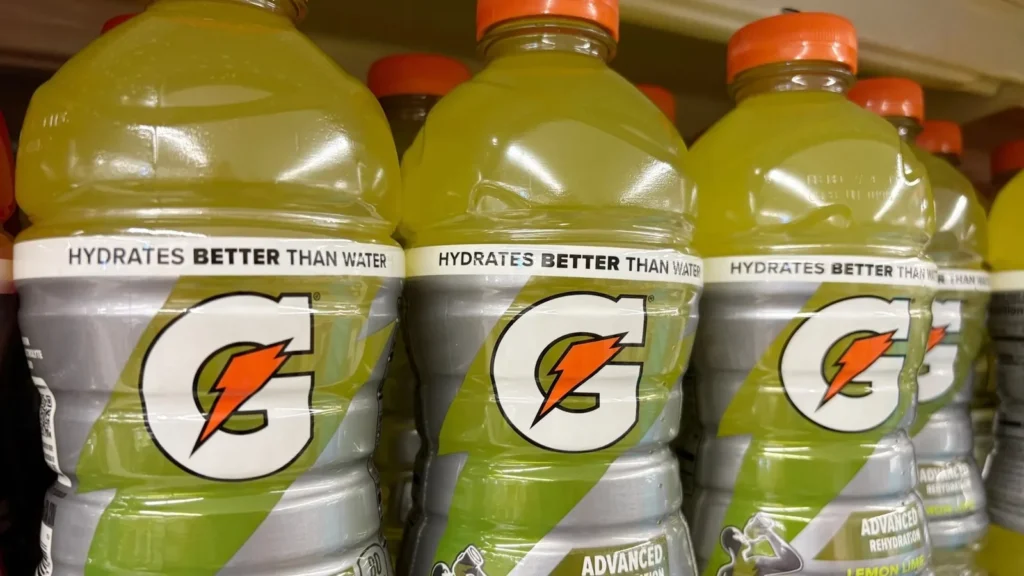
The recall covers 122,021 cases of 28-ounce bottles in several flavors, including Gatorade Lemon Lime, Gatorade Lemon Lime Zero, Gatorade Orange and Gatorade Orange Zero. PepsiCo voluntarily began the recall on Sept. 25, and the FDA later classified it on Oct. 2. The action remains ongoing, according to the agency.
Which Gatorade bottles were included in the recall
The FDA said the recall involves 28-ounce bottles from four citrus-flavored varieties. The affected products are Gatorade Lemon Lime, Gatorade Lemon Lime Zero, Gatorade Orange and Gatorade Orange Zero.
According to the agency, the problem is that the drinks contain undeclared Yellow No. 5 and/or Yellow No. 6. Those dyes were not listed as expected on the labeling tied to the recalled cases, which is why the products were pulled from distribution.
Consumers who have these drinks are being told to check the lot numbers listed in the recall notice. That information is the clearest way to determine whether a specific bottle is part of the recalled inventory.
How the FDA classified the recall and what that means
The FDA assigned the case a Class II designation, a category reserved for products that may lead to temporary or medically reversible health consequences. It also covers situations where the probability of serious health problems is remote.
That classification does not mean every consumer faces the same risk. It does mean regulators considered the labeling issue significant enough to warrant formal action and public notice. In food recalls, undeclared ingredients are treated seriously because they can matter for people with allergies or other sensitivities.
The FDA said no press release has been issued for the recall, but the enforcement report lists it as active. The agency’s classification and posting give consumers and retailers a way to track the affected products while the recall continues.
PepsiCo started the recall in late September
PepsiCo voluntarily initiated the recall on Sept. 25, several days before the FDA classified it. That timing suggests the company first identified the issue and then worked through the agency’s recall process.
The FDA’s enforcement report shows the action was later formally designated on Oct. 2. Even after that classification, the recall did not end. Regulators still describe it as ongoing, which means affected products may still need to be located and removed from shelves or consumer homes.
The company has not issued a public press release on the matter, according to the FDA’s enforcement report. Instead, the FDA posting serves as the main public notice tied to the recall.
The recall reaches stores and households in 37 states
The recalled cases were distributed across 37 states, stretching from the Northeast to the South and West. Among the states named by the FDA are New York, New Jersey, Pennsylvania, Florida, Texas, North Carolina and California.
Because the drinks were shipped to so many states, the recall has a broad reach beyond a single region. Retailers in the affected states may need to check inventory, while households that bought the drinks should look for lot codes against the recall notice.
For shoppers, the key detail is that the recall is tied to specific product lots rather than every Gatorade bottle on the market. The FDA notice is the best reference point for determining whether a particular case was included.
What consumers should do if they bought the recalled drinks
Anyone who has Gatorade Lemon Lime, Lemon Lime Zero, Orange or Orange Zero in 28-ounce bottles should compare the lot numbers on the package with the recall notice. That is the method the FDA points to for identifying affected products.
Consumers with the recalled cases may want to avoid drinking them until they confirm whether the bottles are included. The undeclared dyes are the reason the product was recalled, and the FDA says the action remains active.
For now, the recall notice is the central public guidance. The agency has not announced a broader press campaign, so checking the enforcement listing and lot numbers is the most direct way to verify whether a bottle is part of the affected shipment.

Leave a Reply