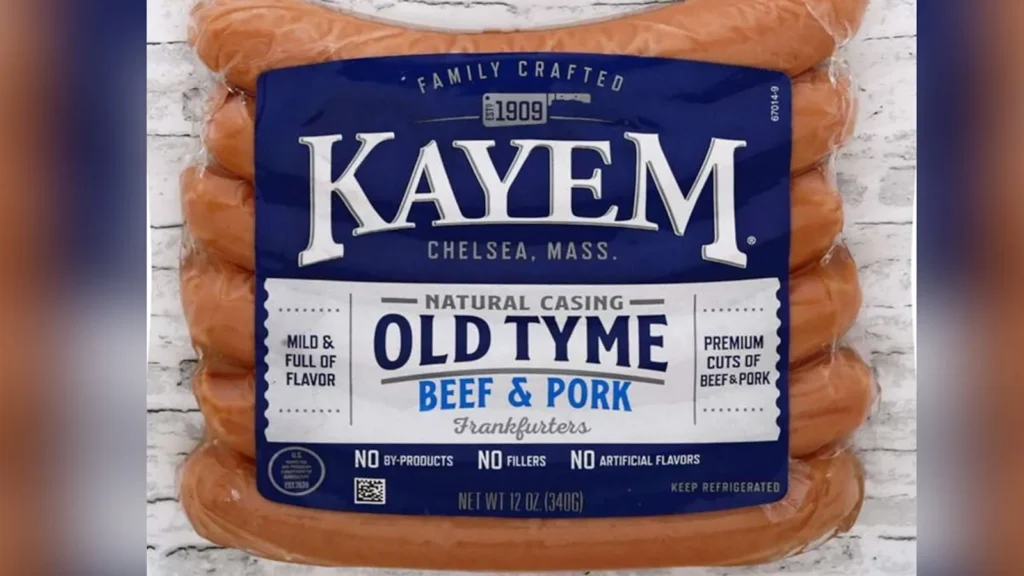



WASHINGTON, DC — Nearly 1.6 million pounds of ready-to-eat cooked meat and poultry products are being recalled after a storage temperature problem at a Massachusetts company’s warehouse, according to Kayem Foods and the U.S. Department of Agriculture’s Food Safety and Inspection Service.
The recall was announced last week and affects products shipped across the United States as well as to Hong Kong. Kayem Foods said the issue began with a cooling system malfunction that led to temperature deviations in storage.
The company’s president and CEO, Matt Monkiewicz, said in a statement that Kayem takes food safety seriously and accepted responsibility for the problem. He said the company has corrected the issue and will not allow it to happen again.
Cooling system failure triggered the nationwide food recall
Kayem Foods said the recall was initiated after a malfunction in one of its warehouses caused temperatures to drift outside the proper range. That kind of storage problem can matter for meat and poultry because the products need to stay refrigerated or frozen to remain safe.
The USDA says meat should be kept at 40 degrees Fahrenheit or colder in the refrigerator, or frozen at 0 degrees. The agency also points consumers to its cold storage guidance for additional reference on safe handling.
The recall covers a broad category of ready-to-eat products, including items such as bacon, bologna, bratwurst and brisket, along with chicken sausage, corned beef, frankfurters, hot dogs and kielbasa.
What products are affected and how they were labeled
According to the USDA, the recalled meats include products bearing establishment numbers “EST. M/P 7839,” “EST. P 20935A” and “EST. M 9520” inside the USDA mark of inspection on the label. Consumers are being urged to check packages carefully for those identifiers.
A full product list is available on the USDA’s website, since the recall spans multiple kinds of cooked meat and poultry. The agency said the items were produced between about March 31 and Oct. 7.
Kayem Foods said the products were stored and shipped between June 7 and Oct. 14, which is the period tied to the warehouse issue. Because of the wide distribution, the recall reaches both retail and wholesale channels.
No illnesses have been reported so far
So far, the USDA and Kayem Foods say no illnesses have been linked to the recalled products. Even so, the companies are advising people not to eat any food they believe may be affected.
Anyone who is concerned about possible illness should contact a healthcare provider, the USDA said. Foodborne illness can be a risk when products are not stored under proper temperature conditions.
For consumers, the practical advice is simple: do not taste or serve the recalled meat, and keep any suspected packages separated from other foods until they can be discarded or returned according to instructions.
Kayem Foods is contacting buyers and retailers about disposal
Kayem Foods said it is reaching out to wholesale and retail customers to explain what to do with the recalled products. The company is also providing instructions for disposal, which is meant to keep the affected items from being sold or eaten.
The recall notice did not say that the problem involved contamination in the food itself. Instead, it centered on how the products were kept in storage after production and before shipment.
Consumers who have questions can contact Kayem Foods customer service at 800-426-6100 or email [email protected].
USDA hotlines and online guidance are available for consumers
The USDA is also directing consumers to its Meat and Poultry Hotline for food safety questions. The toll-free number is 888-MPHotline, or 888-674-6854, and the agency accepts questions by email at [email protected].
Along with the hotline, the USDA offers online information about safe refrigeration and freezing practices. That guidance can help shoppers compare the temperatures in their own refrigerators and freezers with recommended levels.
Because the recalled products were sent nationwide, the USDA is urging consumers anywhere in the country to check their refrigerators and freezers for the affected labels and establishment numbers before serving the meat.

Leave a Reply