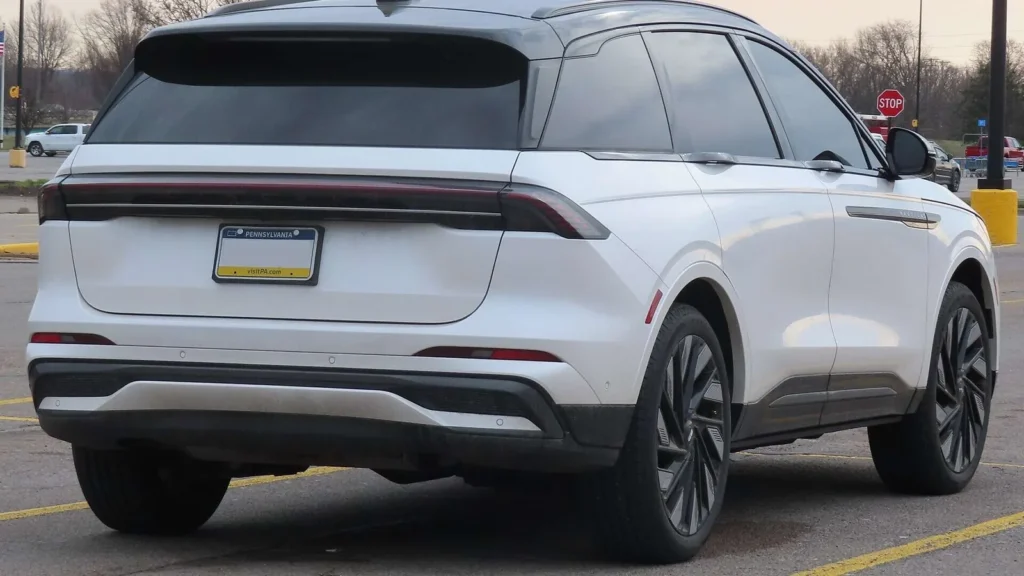
DEARBORN, MI — Ford is recalling 11,623 Lincoln hybrid SUVs because a supplier changed the anti-rust oil used on a park module without Ford’s approval, creating a corrosion risk that can affect shifting. The issue covers 2026 and 2027 Lincoln Nautilus Hybrid models and a small number of 2027 Lincoln Corsair Hybrids.
According to Ford’s recall report filed with the National Highway Traffic Safety Administration on Oct. 20, the oil may damage the conformal coating on the module’s circuit board. That coating helps protect the electronics from moisture and contamination. If it degrades, Ford says corrosion can develop on key components and trigger a voltage drop that may cause the vehicle to shift into Neutral while driving.
How the anti-rust oil change created a shifting hazard
Ford says the problem centers on the Integrated Park Module, where the circuit board is protected by a thin polymer conformal coating. The supplier changed the anti-rust oil used on that part, but Ford says it was not told about the change and the new oil was never validated for compatibility with the coating.
That matters because the oil can attack the protective layer and leave the board exposed. Ford’s analysis found that once the coating was degraded, corrosion could affect a rotary sensor circuit and a related capacitor. A voltage drop in that sensor can lead to an unexpected shift into Neutral, while a parked vehicle may be unable to shift out of Park at all.
Which Lincoln models are included in the recall
The recall includes 11,560 Lincoln Nautilus Hybrids from the 2026 and 2027 model years. Ford said those vehicles were built between Sept. 9, 2025, and Aug. 6, 2026. It also covers 63 2027 Lincoln Corsair Hybrids built between March 12 and July 8, 2026.
Ford identified the action as NHTSA campaign 26V688 and Ford recall 26S75. The company said affected vehicle identification numbers became searchable in NHTSA’s recall lookup on Oct. 26. Owners can use that database to confirm whether a specific vehicle is included.
Warning lights and diagnostic codes owners may see
Ford said drivers may notice a wrench light along with either a “Service Vehicle Soon” message or a “Shifting System Error” warning. Dealers have also found diagnostic trouble code P271A in affected vehicles.
The automaker said it had recorded 15 U.S. warranty claims and 106 warranty claims worldwide as of Sept. 28. It also logged one U.S. field report and one U.S. customer report. Ford said it had no reports of crashes, fires or injuries tied to the issue.
Ford’s investigation moved from a July concern to an October recall decision
Ford’s chronology shows the problem surfaced in a regional review group in July before moving to its North American group on Aug. 13. Failure analysis was completed in September, and the company’s Field Review Committee approved the recall on Oct. 13.
The recall report says the supplier did not disclose the oil change and did not validate that the new oil would work with the coating already on the module. That failure in the process, rather than ordinary wear, is what Ford says allowed the issue to slip through before the vehicles reached customers.
What dealers will replace and when owners should hear from Ford
Dealers will replace the affected module with a version that does not contain the problematic oil and includes the latest software, Ford said. The repair will be provided at no charge to owners.
Ford expected to notify dealers on Oct. 26 and mail owner letters from Nov. 2 through Nov. 6. The company’s remedy is intended to remove the oil-related corrosion risk and update the software tied to the module’s operation.
Ford’s recall came during a busy week for NHTSA filings
Ford’s action was one of five recall filings made with NHTSA between Oct. 20 and Oct. 22 by Ford, Chrysler, BMW and General Motors. Together, those recalls cover 55,125 vehicles, though Ford noted that Toyota’s much larger Sienna Hybrid recall was handled separately by The Auto Wire.
The other filings included a Durango tail light issue on 2026 models, a BMW recall covering 45 vehicles previously repaired under an earlier campaign, and a GM recall involving four vehicles. Ford’s hybrid recall stands out because the defect traces back to a supplier’s undisclosed material change, not to normal wear on a part.
Owners can check their VIN through NHTSA’s recall lookup to see whether their vehicle is affected. Ford’s report says the company has not seen any crashes or injuries, but the shifting problem can still pose a serious drivability risk if it appears on the road.

Leave a Reply