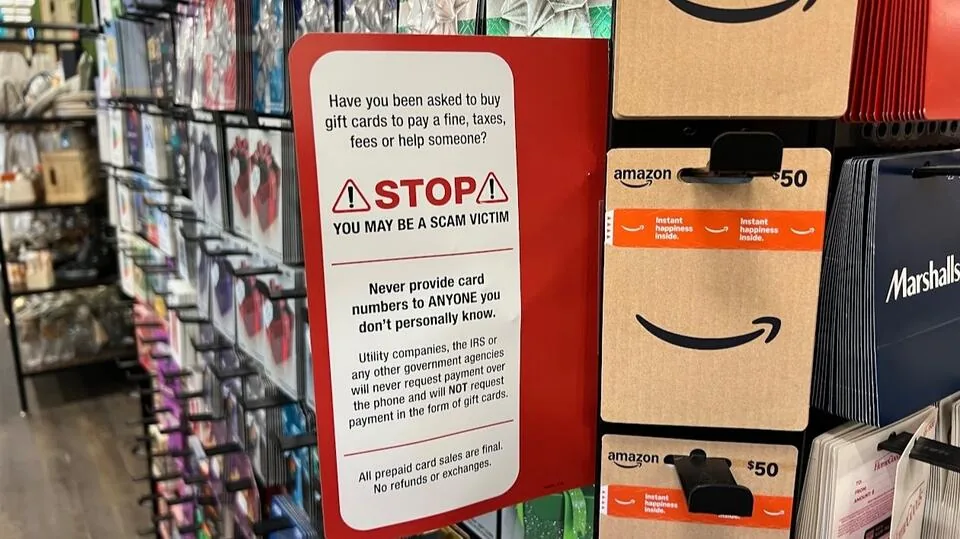


WASHINGTON, DC — Federal consumer officials are warning shoppers to look closely at gift cards before they buy them, especially as the holiday shopping season approaches. The Federal Trade Commission says criminals have found ways to steal card numbers and security codes from cards sitting on store racks, then wait for a legitimate customer to load money onto the card.
That means a gift card can look normal at the register and still be compromised. Once the card is activated, scammers may be able to drain the balance without ever touching the card again. The FTC says a quick inspection of the stickers, PIN area and packaging can help shoppers avoid buying a gift that turns into a loss.
How tampering can happen before the gift card is sold
According to an FTC consumer alert from December 2024, fraudsters may alter physical gift cards while they are on display in stores. They can remove protective stickers, scratch away the concealment over a PIN or otherwise expose information printed on the card.
The scam works because the criminal records the card number and security code before the card is purchased. In many cases, the card may not have any money on it yet. The thief waits for a shopper to buy and activate it, then uses the stolen information to access the funds later.
Customers often do not realize anything is wrong until the recipient tries to use the card and finds the balance missing. By then, the money may already be gone.
The warning signs the FTC says to look for on the card itself
The FTC says shoppers should turn a card over before taking it to the register and check the number and PIN area carefully. Missing or damaged stickers are a red flag, especially if they look removed and replaced.
Buyers should also watch for a PIN that is already visible when it should still be covered, along with scratches, odd marks or packaging that appears opened or altered. If anything looks suspicious, the advice is not to buy that card and to tell a cashier or store manager right away.
The agency also notes that tampering can affect more than one card in the same store display. Finding one questionable card may be a sign to shop somewhere else rather than simply choosing another card from the same rack.
Barcode stickers can reroute the money to scammers
Another technique involves the barcode that activates the card. The Better Business Bureau has described schemes in which criminals place fraudulent barcode stickers over legitimate ones.
When a cashier scans the altered code, the money may be loaded onto an account controlled by the scammer instead of the card the customer thinks they are buying. That can leave the shopper with a card that appears legitimate but does not hold the intended value.
The BBB recommends checking the back of the card for unusual stickers and even feeling for a sticker layered over the original barcode. It also advises buying gift cards from reputable retailers rather than unfamiliar third-party websites or auction listings.
Why the FTC says a credit card can offer better protection
The FTC says another useful precaution is to pay with a credit card when possible. Compared with cash or some other payment methods, credit cards generally provide stronger dispute protections.
If a purchased gift card turns out to be compromised, the buyer may be able to challenge the charge with the card issuer. That does not guarantee a refund, but it can give shoppers more options if fraud is discovered.
The agency also recommends keeping the gift card itself and the receipt. Taking photos of both the card and the proof of purchase can help preserve key details if the physical documents are lost before a claim is filed.
What to do if a gift card balance disappears
If a card is drained, the FTC says consumers should contact the company that issued it as soon as possible. Buyers should explain what happened, give the card number and receipt, and ask whether any funds can be protected or recovered.
Some gift card companies may reimburse victims, although recovery is not guaranteed. The agency also says suspected fraud can be reported at ReportFraud.ftc.gov, where consumer complaints help identify patterns and support investigations.
Federal officials also caution that gift cards should never be used to pay unexpected bills, taxes, fines or emergency fees. Scammers frequently impersonate employers, government agencies, businesses or even relatives to pressure people into buying cards and sharing photographs of the numbers and PINs.

Leave a Reply