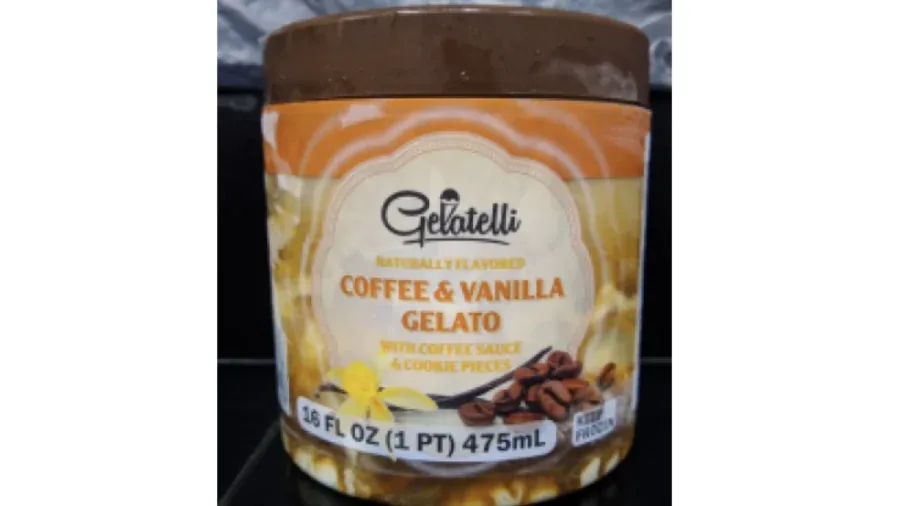
WASHINGTON, DC — Federal regulators have elevated the recall of Gelatelli coffee and vanilla gelato to a Class I event after concerns that the product could be contaminated with Listeria monocytogenes. Lidl US voluntarily withdrew the dessert from the market on Oct. 16, and the U.S. Food and Drug Administration later upgraded the action to its most serious recall category.
The recall covers 1,122 pints of Naturally Flavored Gelatelli Coffee & Vanilla Gelato with Coffee Sauce & Cookie Pieces. The affected product was sold in nine states, and the FDA says the risk designation reflects the possibility of serious health consequences or death if the product is used or consumed.
What the FDA’s Class I designation means for shoppers
A Class I recall is the FDA’s highest-level risk alert. The agency uses that label when there is a reasonable probability that exposure to a violative product could cause serious harm or death. In this case, the concern centers on possible contamination with Listeria monocytogenes.
That bacterium can cause listeriosis, a foodborne infection. According to the Cleveland Clinic, symptoms may be mild in some people, but the illness can become life-threatening for others. Because of that risk, the FDA treats possible Listeria contamination as a major public-health concern, especially for products already distributed to consumers.
The upgrade does not change the fact that Lidl US initiated the recall voluntarily, but it does signal that federal regulators consider the issue severe enough to warrant the strongest warning available.
Where the recalled gelato was sold and how to identify it
The recall applies to 16-fluid-ounce cartons of the Italian dessert with UPC 4 056489 722458 and a best-by date of March 26, 2028. The product is packaged in a clear plastic container with a brown lid, details that may help shoppers identify the item quickly in a freezer or at home.
The affected gelato was distributed in Delaware, Georgia, Maryland, New Jersey, New York, North Carolina, Pennsylvania, South Carolina, and Virginia. Consumers in those states should check their freezers for the specific Gelatelli flavor combination and the matching packaging information.
Retailers and customers who have the product should treat it as part of the recall, even if it appears normal or has been stored properly.
Why Listeria contamination draws close attention from health officials
Listeria monocytogenes is especially concerning because it can survive in chilled environments where many foods are kept before sale or consumption. That makes frozen and refrigerated products a particular focus for food safety oversight when contamination is suspected.
Health officials track the organism closely because the consequences can be serious, particularly for vulnerable people. The FDA’s decision to upgrade this recall shows that the agency sees the potential exposure as more than a routine quality problem.
When a product tied to Listeria is already in homes or stores, regulators often move quickly to alert the public. The goal is to reduce the chance that shoppers unknowingly keep or serve a product that could cause illness.
Lidl recall adds to a summer of dessert-related food safety actions
The Gelatelli case is not the only recent frozen-dessert recall to draw scrutiny from federal regulators. In August, the FDA escalated a separate recall of non-dairy ice cream sandwiches distributed only in Michigan because of possible undeclared eggs. By Aug. 26, that item had also been assigned a Class I recall event.
That earlier recall involved 66 retail units of Frozen Dessert Coconut Fudge sandwiches sold in Ann Arbor and Brighton at three store locations. The product was packaged in 4.5-ounce clear plastic containers, and the problem was traced to an ingredient supplied by another company.
That ingredient was Rooted in Rare brand Aquafaba Powder, a chickpea-based egg substitute sold in 4-ounce and 12-ounce foil pouches. Together, the two cases show how allergen and contamination risks can emerge at different points in the food supply chain.
What consumers should do if they bought the recalled product
Shoppers who have the recalled Gelatelli gelato should not eat it. They should check the UPC, the expiration date, and the packaging description against the recall information to confirm whether the carton is affected.
Because the FDA has classified the event as Class I, consumers should treat the product as unsafe until they verify otherwise. The recall spans multiple states, so even customers who bought the dessert weeks ago may still have it in a home freezer.
Anyone concerned about possible exposure to Listeria should pay attention to symptoms and seek medical advice if they feel unwell. Food recalls like this one are meant to interrupt that chain of exposure before illness occurs.

Leave a Reply