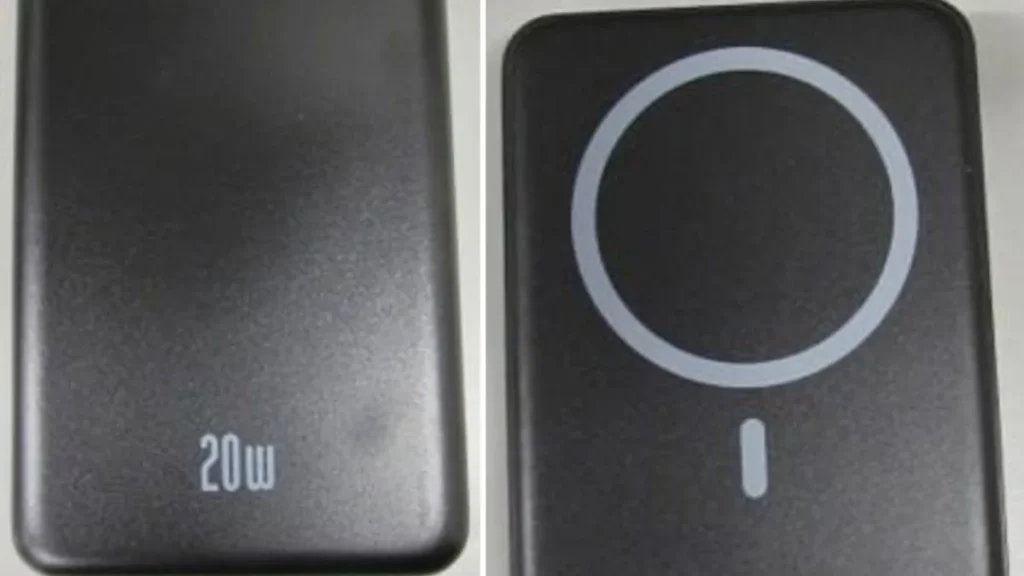

WASHINGTON, DC — About 11,000 power banks sold on Amazon are being recalled because federal officials say they can overheat and create a fire risk. The devices are HAIARA power banks, model W5 PRO, sold by Mitrytech.
Officials said the recall applies to units with “20W” printed on the front and the model number on the side. It covers power banks with no date code printed on the side in the format YYYYMMDD.
Mitrytech has learned of at least 600 reports involving fire and other incidents. Those reports include three burn injuries and nine property damage cases.
What consumers should look for on the recalled HAIARA W5 PRO units
The recalled products were sold on Amazon.com and came in a price range of $18 to $22. According to the notice, the power banks were sold from May 2025 through September 2026.
They were manufactured in China. Consumers who bought one should compare the markings on the device carefully, especially the “20W” label and the model number W5 PRO.
The recall notice says the warning applies to power banks that do not have a date code printed on the side. If the device matches that description, it should be treated as part of the recall until the owner confirms otherwise.
Fire, burn and property damage reports pushed the recall forward
Federal officials said the recall follows a large number of complaints tied to the product. The incidents reported to Mitrytech include fires as well as other problems, making the case one of broad safety concern rather than a single isolated failure.
While most consumers may think of a power bank as a simple charging accessory, lithium battery packs can become dangerous if they malfunction. In this case, the volume of incident reports was high enough to trigger a nationwide action.
The injuries and damage tied to the devices are limited in number compared with the overall report count, but the details underscore the seriousness of the hazard. The recall notice specifically cites both physical harm and property losses.
Refunds require a photo of the power bank marked 'recalled'
Consumers who bought the product from Mitrytech on Amazon are being told to stop using it right away. Federal officials and the company say the safest step is to take the power bank out of service immediately.
To get a full refund, buyers must contact Mitrytech for instructions. The company says consumers will need to submit a photo of the recalled power bank with the word “recalled” written on it in permanent marker.
Customers must also confirm that the device has been disposed of in accordance with applicable laws and regulations. The refund process is tied to proof that the recalled item is no longer being used.
Amazon marketplace sales spread the affected devices widely
The fact that the batteries were sold through Amazon means the affected products may be in households across the country. The online marketplace helped move the devices to a broad customer base over more than a year of sales.
The recalled units were listed at a relatively low price, which may have made them an easy add-on purchase for shoppers looking for portable charging. Even so, the recall shows that low-cost electronics can still carry major safety risks if they are defective.
Federal officials did not say how many of the recalled units are still in consumers’ homes, but the size of the sale window and the number of incident reports suggest the products reached a wide audience.
Why battery recalls matter for everyday users
Portable chargers are common travel and daily-use items, which can make a recall especially important. A power bank is often stored in bags, bedrooms or cars, where heat and battery failures can quickly turn into a fire hazard.
This recall is a reminder for consumers to check labels on electronics they rely on every day. Model numbers, markings and date codes can determine whether a device is included in a safety action.
Anyone who finds a matching HAIARA W5 PRO unit should stop using it and follow the refund instructions rather than trying to keep it in service. The recall notice makes clear that the device should not remain in regular use while the fire risk remains unresolved.

Leave a Reply