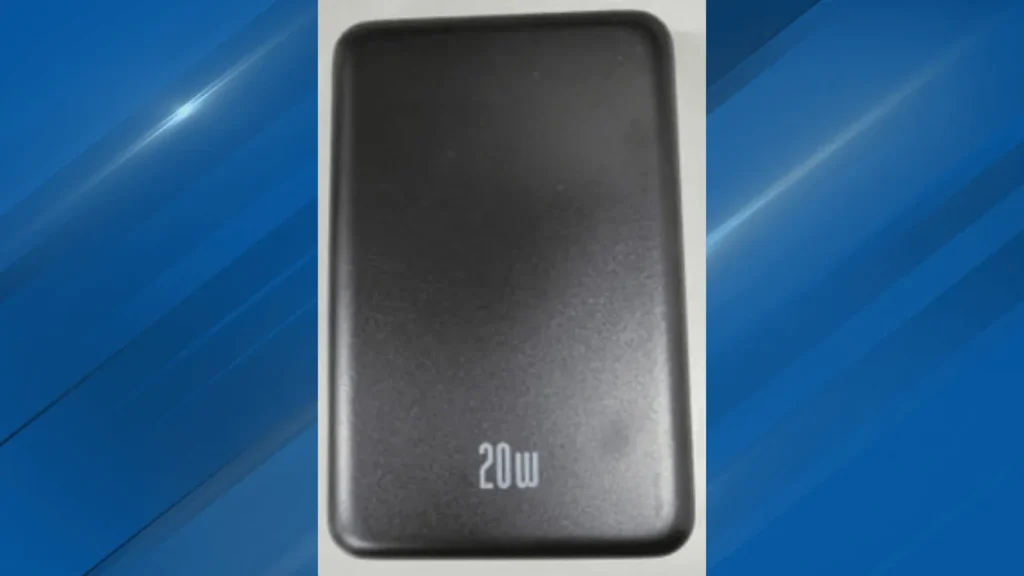
LAS VEGAS, NV — A power bank sold through Amazon is being recalled after federal safety officials received 600 reports of fires and other heat-related incidents tied to the device. The Haiara W-5 Pro power bank was sold from May 2025 through September 2026 for about $18 to $22.
The Consumer Product Safety Commission says the lithium battery in the unit can explode and catch fire. Regulators say the recall covers power banks with no date code printed on the side, and consumers are being told to stop using them right away.
What the federal recall covers
The recall centers on the Haiara W-5 Pro power bank, a portable charger sold online in the United States. According to the Consumer Product Safety Commission, the hazard involves the internal lithium battery, which may overheat, explode or ignite.
Only units without a date code printed on the side are included in the recall. That detail matters because consumers may need to check the side of the device before deciding whether their charger is affected.
The product was sold for roughly $18 to $22 over a stretch of more than a year, making it a relatively inexpensive accessory that many buyers may have purchased with other electronics or travel gear.
Hundreds of fire incidents and reported injuries
Federal regulators say the recall is backed by a large number of incident reports. The Consumer Product Safety Commission said it had received 600 reports of fires connected to the power bank.
Those reports include three burn injuries and nine instances of property damage. The agency did not provide further details about where the incidents happened or how serious the injuries were, but the scale of the reports makes this a significant consumer safety action.
Heat-related failures in battery products can create fast-moving risks because they may start fires unexpectedly while a device is charging, stored in a bag or being used near other flammable items.
How owners are supposed to respond
Consumers who have one of the recalled chargers are being told to stop using it immediately. The company is offering refund instructions for customers who want to return or dispose of the product.
To complete the refund process, the company will ask buyers to send a photo of the power bank marked “recalled” and to confirm that they have disposed of it. That step is meant to keep the device out of circulation after a refund is requested.
Anyone who thinks they own the charger should avoid charging it or continuing to use it until they have confirmed whether the unit matches the recall description.
Why lithium battery recalls can be urgent
Lithium-ion batteries are common in portable electronics because they are lightweight and rechargeable, but they can become dangerous when manufacturing defects or damage cause them to overheat. In this case, the Consumer Product Safety Commission says the battery can explode and catch fire.
That kind of failure can spread quickly and cause harm to people nearby as well as damage to homes, vehicles and personal belongings. Even a small charger can become a serious fire source if it malfunctions while plugged in or stored with other items.
Because the device is sold as a portable accessory, many consumers may have used it in backpacks, bedrooms, offices or vehicles, where a battery fire could create especially serious risks.
Where to check recall details and get more information
Consumers can find additional information and refund directions at haiara.net/recalls. That page is being used by the company to guide owners through the process and confirm whether a device is affected.
The recall announcement adds another reminder for shoppers to review battery-powered accessories carefully, especially when they are sold online at low prices. Portable chargers are widely used, but a defect in one can create risks that are much more serious than the product’s cost suggests.
Anyone who owns a Haiara W-5 Pro should check for the missing side date code, stop using the device if it matches the recall, and follow the company’s instructions for disposal and refund steps.

Leave a Reply