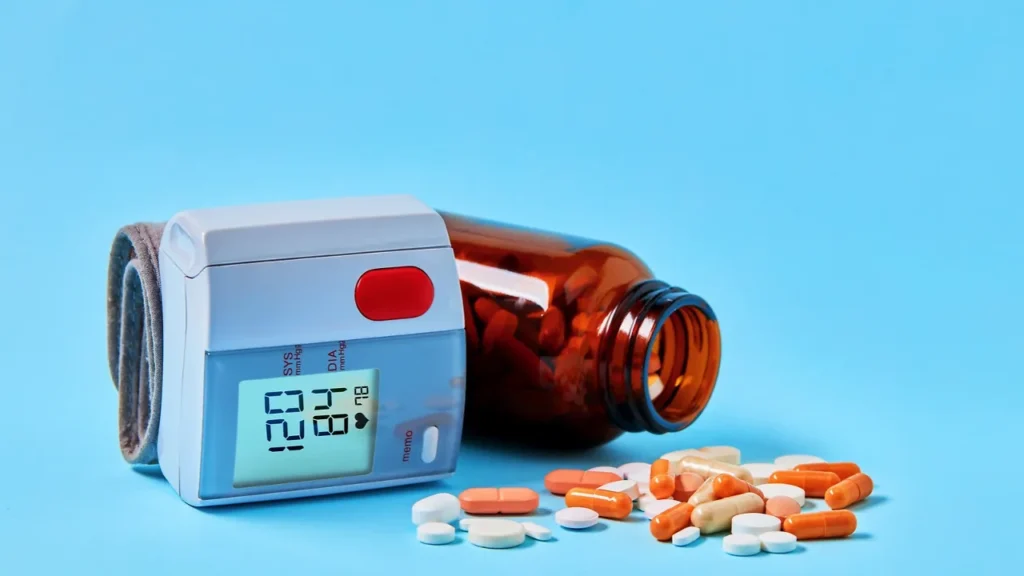


WASHINGTON, DC — Federal regulators have announced recalls for two combination blood pressure medicines after quality problems raised concerns about how the drugs were made and how they may perform in patients. One product may contain more of an active ingredient than its label allows, while the other did not pass testing tied to how quickly it dissolves in the body.
The recalled medicines are used to help treat hypertension, a condition that affects millions of Americans and often requires long-term drug therapy. The action adds to a growing list of medication quality issues that can disrupt treatment plans and force patients, pharmacies, and prescribers to check whether bottles on hand are affected.
Which hypertension medicines were pulled from shelves
The recall covers combination medications prescribed for blood pressure control, rather than a single-brand treatment. According to the Food and Drug Administration, the concern centers on two separate products that failed to meet expected standards during review.
One drug was flagged because it may contain more of an active ingredient than the amount listed on the label. The other failed quality testing that looks at dissolution, or the rate at which a pill breaks down and releases medicine after it is taken. That test matters because a drug that dissolves too slowly or too quickly may not work as intended.
While the announcement did not spell out patient-level harm, the FDA treats out-of-specification medication quality as a serious manufacturing issue because it can affect dose consistency and overall effectiveness.
Why excess ingredient levels matter for blood pressure treatment
For hypertension drugs, precision is important. Patients often take these medicines every day, sometimes alongside other prescriptions that also influence blood pressure, kidney function, or heart rhythm. If a tablet contains more active ingredient than expected, that can create dosing concerns even before any symptoms appear.
Too much medicine in a single dose may raise the risk of side effects, while too little can leave blood pressure less controlled than intended. Either scenario is especially concerning for people who depend on stable dosing to manage chronic disease over time.
The FDA’s action underscores that medication recalls are not limited to obvious contamination problems. Quality failures can also involve chemistry, strength, or how a pill performs once swallowed, all of which matter to day-to-day treatment.
How failed dissolution testing can affect a pill's performance
The second product was recalled after it did not meet dissolution standards, a laboratory check used to confirm that a tablet or capsule releases its medication at the right pace. That process is a routine part of drug quality oversight because the body can only absorb the medicine once it begins to break apart properly.
If dissolution is off, a patient may not receive the drug in the way regulators expected when approving or monitoring the product. That does not automatically mean the medicine is dangerous in every case, but it does mean the product did not meet required quality benchmarks.
For people taking a combination blood pressure pill, any change in how the medication releases can be important because the treatment is designed to deliver a predictable effect across the day. Regulators said the failed test was enough to trigger action.
What patients and pharmacies should do now
Patients who use a recalled blood pressure medicine should compare the product name, strength, and lot details against the recall notice and contact their pharmacist or doctor if they believe they have a matching bottle. Pharmacies should also review stock and remove any impacted inventory from circulation.
People should not stop taking a prescribed blood pressure medication without speaking with a clinician first, because suddenly missing doses can also create health risks. A doctor or pharmacist can help identify whether a replacement is needed and whether another formulation is appropriate.
As with most medication recalls, the practical goal is to keep affected product out of patients’ hands while preserving treatment continuity. For chronic conditions such as hypertension, fast communication can help reduce confusion and avoid gaps in therapy.
The FDA's wider role in drug quality enforcement
The FDA routinely monitors the safety and quality of medications sold in the United States and can step in when a manufacturer’s product fails to meet standards. Recalls often follow testing, complaints, or other quality checks that show a medicine may not be manufactured as labeled.
In this case, the agency’s concerns were centered on excess active ingredient in one medicine and dissolution failures in the other. Those findings show how recalls can arise from different kinds of production or testing problems, even when the medicines are used for the same condition.
For consumers, the broader message is that even common prescriptions can be subject to federal action when quality checks uncover a problem. That is why pharmacists and patients are urged to pay close attention to recall notices, especially for drugs taken daily.

Leave a Reply